CO2 emission savings of heat-pumps in the residential sector. Case study for multifamily buildings in Geneva
 | Pierre HollmullerHead of Systèmes Energétiques Group |
Abstract
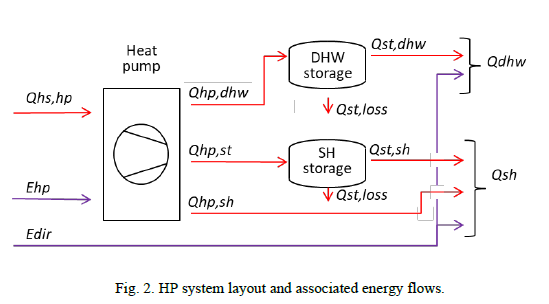
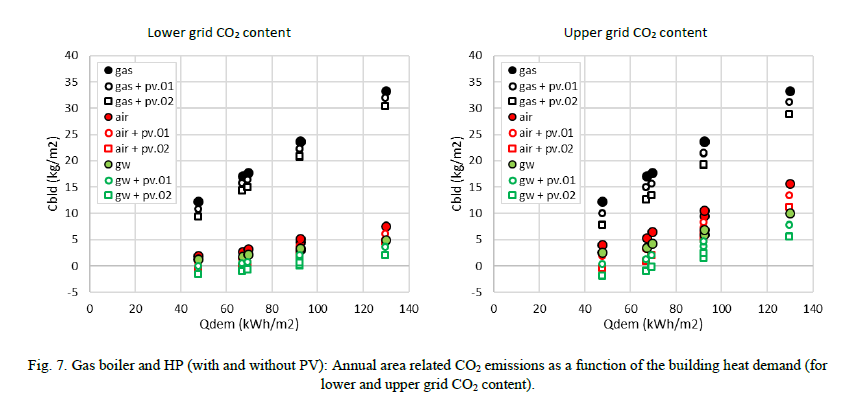
The present paper assesses the CO2 emissions of air-source and groundwater-source HP systems, with and without complementary PV, for a sample of multifamily buildings (new, retrofitted and non-retrofitted) located in Geneva. HP performance is evaluated by way of numerical simulation in hourly time step, and is cross-cut with the hourly grid CO2 content of the Swiss electricity mix (taking into account both domestic generation and imports from the neighbor countries). Given the seasonal trend of both the building heat demand and the grid CO2 content, latter turns out to strongly underestimate the CO2 content of the HP system electricity. Nonetheless, when compared with a gas boiler, both HP systems induce important annual CO2 savings (air: 61 - 81% depending on the accounting method; groundwater: 75% - 87%). Finally, while PV can substantially contribute to the summer HP demand, the related annual CO2 savings remain relatively marginal, also due to seasonality of the grid CO2 content.
Authors: Romano, Elliot; De Sousa Fraga, Carolina; Hollmuller, Pierre.
Note: This result was developed outside of the Renowave project.